Reproducibility crisis
Introduction
ImportantProblem statement
Published research findings are sometimes refuted by subsequent evidence, with ensuing confusion and disappointment. Refutation and controversy is seen across the range of research designs, from clinical trials and traditional epidemiological studies to the most modern molecular research. There is increasing concern that in modern research, false findings may be the majority or even the vast majority of published research claims. However, this should not be surprising. It can be proven that most claimed research findings are false (Ioannidis 2005).
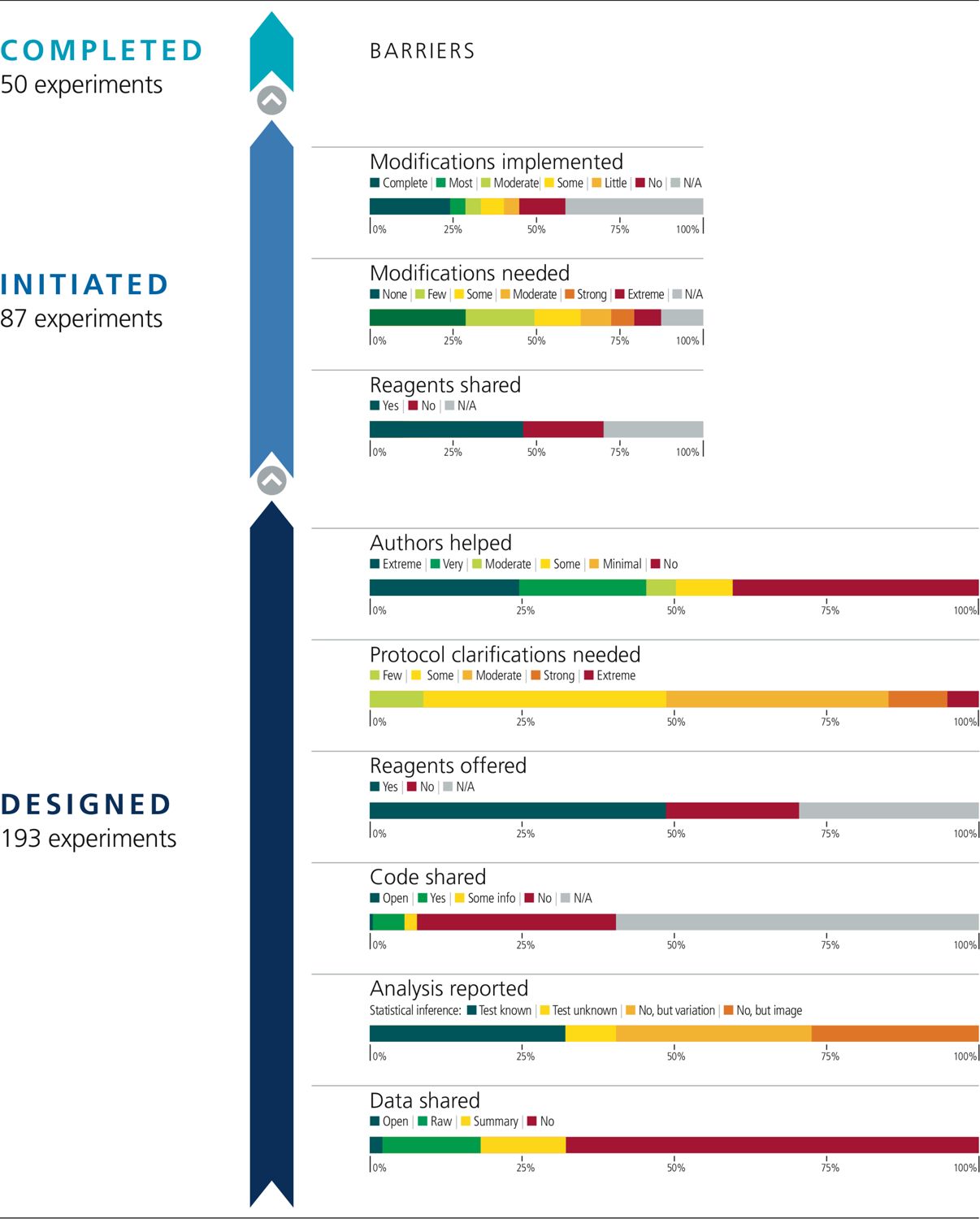
Key resources
Note“Why most published research findings are false”
Explanation of the problem by Ioannidis (2005)
NoteUnreliable
Examination of the problem by Szabó (2025)
Bibliography
Errington, Timothy M, Alexandria Denis, Nicole Perfito, Elizabeth Iorns, and Brian A Nosek. 2021. “Challenges for Assessing Replicability in Preclinical Cancer Biology.” eLife 10 (December): e67995. https://doi.org/10.7554/eLife.67995.
Ioannidis, John P. A. 2005. “Why Most Published Research Findings Are False.” PLoS Medicine 2 (8): e124. https://doi.org/10.1371/journal.pmed.0020124.
Szabó, Csaba. 2025. Unreliable: Bias, Fraud, and the Reproducibility Crisis in Biomedical Research. Columbia University Press. https://doi.org/10.7312/szab21623.
Reuse
Citation
For attribution, please cite this work as:
Forensic Scientometrics. 2026. “Reproducibility Crisis.”
September 7. https://fo-sci.org/issues/reproducibility-crisis/.