Hijacked journals
Introduction
ImportantProblem statement
Hijacked journals represent clone websites of legitimate journals. They copy the title, ISSN, and other metadata of the original journal in order to create an alternative website of the journal and collect APCs from authors for publication. This model represents a scam and is mostly successful in countries that use journal titles and ISSN for journal identification in research evaluation, for example, India and Pakistan (McIntosh et al. 2026).
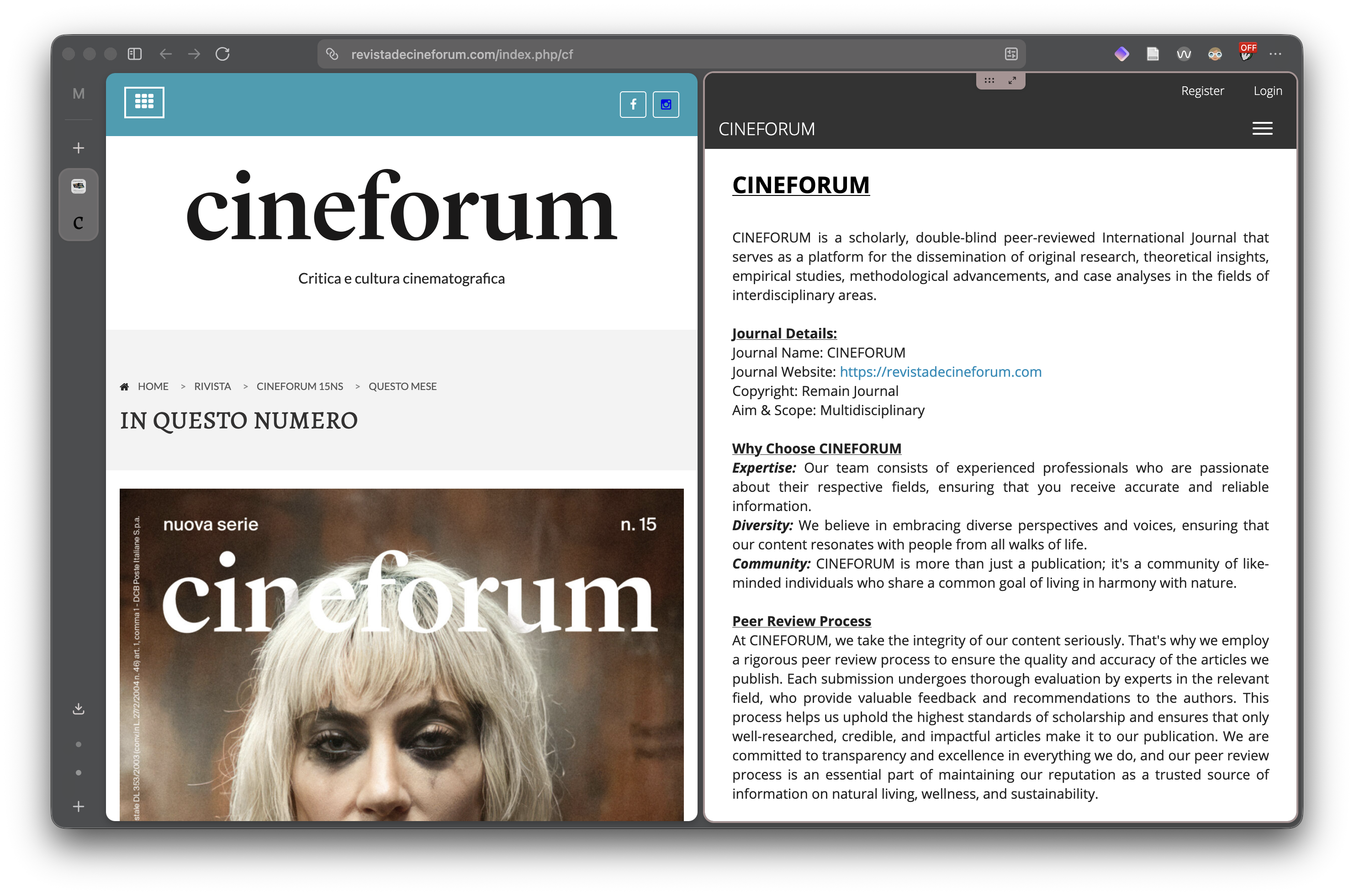
Key resources
Note“Detecting a network of hijacked journals”
Explanation and analysis by Abalkina (2021).
NoteRetraction Watch Hijacked Journal Checker
Database of hijacked journals (https://retractionwatch.com/the-retraction-watch-hijacked-journal-checker/)
Bibliography
Abalkina, Anna. 2021. “Detecting a Network of Hijacked Journals by Its Archive.” Scientometrics 126 (8): 7123–48. https://doi.org/10.1007/s11192-021-04056-0.
McIntosh, Leslie D., Anna Abalkina, Achal Agrawal, et al. 2026. “Forensic Scientometrics (FoSci) Report 2026: Understanding, Detecting, and Documenting Manipulation in the Research Ecosystem.” Version 3. Preprint, Figshare, July 17. 1012969 Bytes. https://doi.org/10.6084/m9.figshare.32178456.v3.
Reuse
Citation
For attribution, please cite this work as:
Forensic Scientometrics. 2026. “Hijacked Journals.”
September 7. https://fo-sci.org/issues/hijacked-journals/.