Fraud, Blackmail, and the Weaponization of Integrity
When Guardians of Science Face Retaliation
When I explain the research ecosystem—how it functions, where it breaks, and how bad actors exploit it—I often meet a mix of curiosity and disbelief. Most people understand corruption in politics, crime in business, or fraud in the art world. But when I suggest research and knowledge itself—a pursuit of truth—can also be a battleground for deception, extortion, and career-ending threats, the reaction is usually shock.
For those who may not know, there is a loosely connected group of individuals—sometimes called sleuths, forensic metascientists, or, in this blog’s case, FoSci-fians—who dedicate their time to investigating research misconduct, scientific manipulations, and the like. Some people do this independently; others are part of organizations or universities with a vested interest in maintaining research integrity. They examine issues like falsified data, fake peer reviews, image manipulation, and complex citation rings. Their work is crucial in exposing fraud and nefarious practices, but it also puts them in the crosshairs of those who have something to hide—and sometimes, those who want to use them as a weapon.
The Research Integrity Battlefield
In the research ecosystem, there are many players: researchers, institutions, funding bodies, and journals, all relying on a fragile web of trust. But, as in any human endeavor, some will act dishonestly. And sometimes, institutions or individuals trying to do good get caught in webs of deception and manipulation.
Take, for example, the case of an academic sleuth investigating a high-profile case of research inconsistencies.
For those unfamiliar, PubPeer is a post-publication discussion forum where researchers can comment on published papers, highlighting potential flaws or even outright misconduct.
At a recent ASCE meeting, I was asked what I thought would happen to PubPeer in the future. My response: PubPeer is invaluable as a tool for transparency, but I fear it could increasingly be weaponized—not to improve science but to threaten scientists. Science is inherently messy, and open discussion helps refine understanding. Fraud should be exposed. But we must be cautious. In the wrong hands, platforms meant to ensure integrity can become tools of extortion.
From Investigation to Intimidation
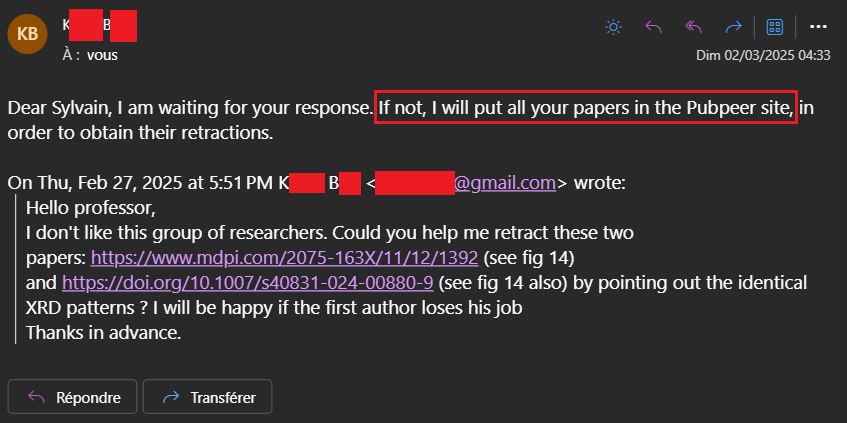
This brings us to a disturbing example: an investigator who has built a reputation for carefully exposing misconduct. One day, Sylvain Bernès receives an email from someone urging him to investigate a particular research group. He chooses not to pursue it—perhaps the case lacks merit, or maybe he doesn’t have the bandwidth. It doesn’t matter as he conducts these investigations on his own time. But then comes the second email:
Dear Sylvain, I am waiting for your response. If not, I will put all your papers on PubPeer in order to obtain their retractions.
In other words: Investigate who I tell you to, or I’ll fabricate accusations against you.
This isn’t about integrity anymore—it’s a direct career threat, an act of blackmail using the same tools designed to uphold research credibility. Suddenly, the investigator becomes the target.
Academic Dishonesty Becomes a Security Threat
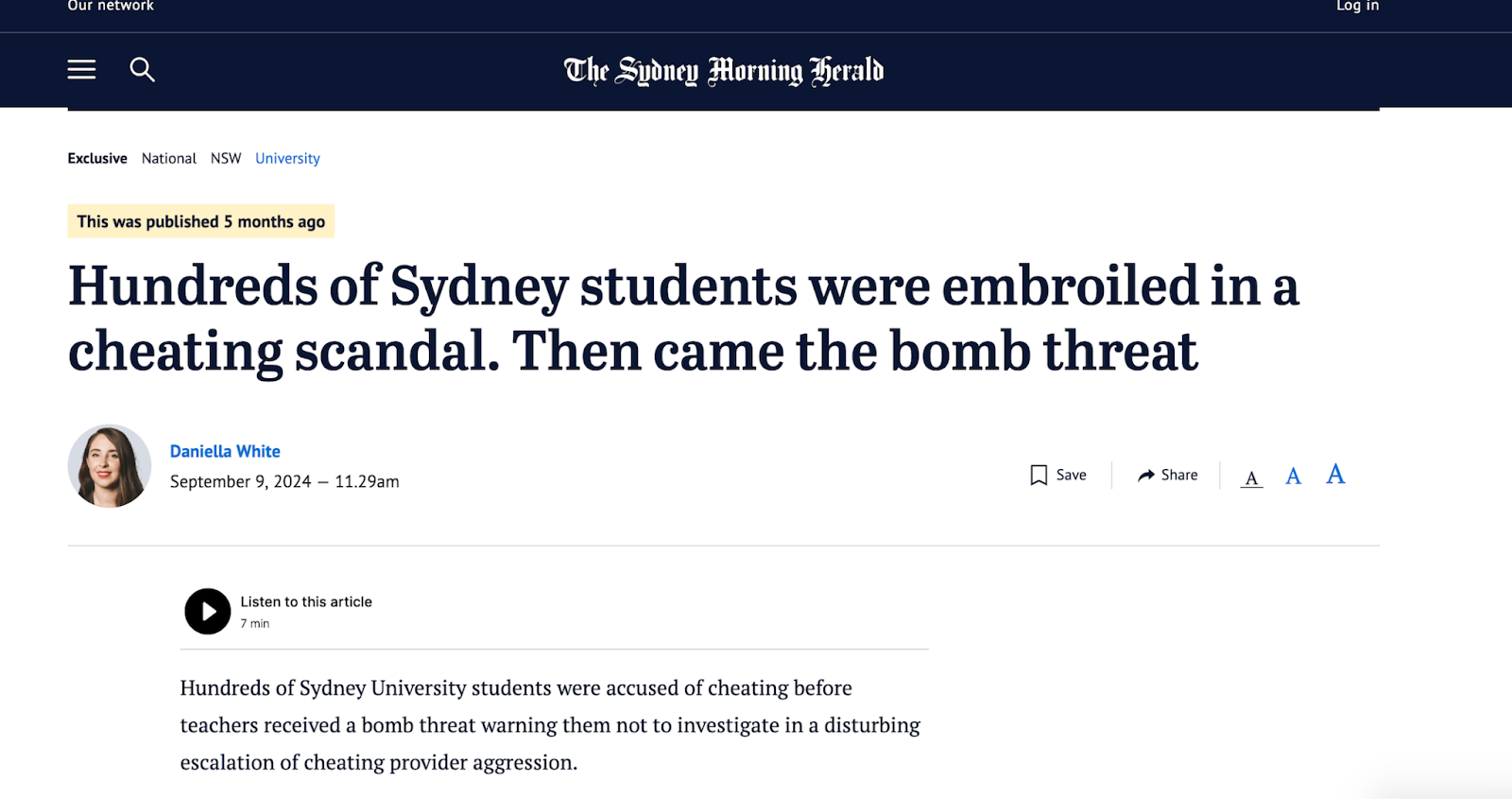
The intersection of academic misconduct and security threats came to the forefront in 2024 at the University of Sydney. After uncovering widespread contract cheating—where students purchased model answers from external providers—the university’s investigation triggered a bomb threat that forced campus evacuation. The investigators were looking into not only those who purchased the goods but also the providers. And the providers did not like their racket being disrupted.
This incident reveals how a wrong but seemingly small-scale misconduct activity can escalate into genuine security threats. The providers of these illicit services, often operating internationally, have evolved from targeting vulnerable students (particularly international ones) to employing increasingly aggressive tactics, including blackmail, intimidation of academic staff, and now, threats of violence.
What Happens Next?
This is the dilemma we face in the world of forensic scientometrics and research integrity: How do we ensure that tools meant to protect science aren’t twisted into weapons? How do we protect both whistleblowers and legitimate researchers from bad-faith attacks?
Science needs transparency. It also needs safeguards—not just against fraud, but against those who exploit the fight for integrity itself.